Two weeks ago, the evening before we were to leave our Manhattan apartment on a 10-day trip to London, we received a phone call informing us that our Tesla Roadster would arrive the next morning at our Litchfield County home. We immediately headed north. Nearly three years after ordering the car, and a year and a half after its initially promised delivery date, it arrived.
It was worth waiting for.
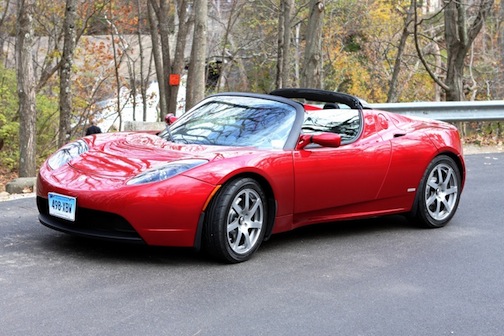
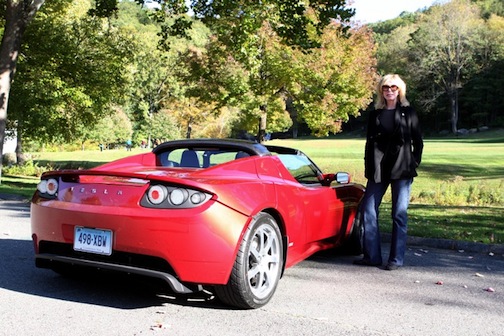
Because of the imminent trip abroad, I only had a few hours to test drive it. And then, after returning home from London, once again I had only a short time to drive it before heading off for New Orleans for the opening ofProspect.1, the new international art biennial. So here are my initial impressions.
Before taking it on public roads, I had to make the dreaded trip to the nearest Connecticut Department of Motor Vehicles office to get license plates. What a contrast that was – registering a 21st-century automobile with a 19th-century government process. Finally, after two hours tortuous waiting, I got the plates, rushed home and then started fulfilling my electric-sports-car odyssey.
The bottom line
It’s an exhilarating experience. The outstanding feature, as compared with any other car I’ve ever owned, sports cars included, is the remarkable acceleration at any speed. It springs away from a standing start. At speed, it passes other vehicles effortlessly. It is quite simply a terrestrial rocket ship.
Perhaps the other outstanding feature is one that I’m reminded of by the “curious incident of the dog that didn’t bark” (in the Sherlock Holmes mystery Silver Blaze). That feature, of course, is the Tesla’s sound, or rather, the lack of it. Curiously, there is just no sound. You would expect a high-performance sports car to make itself known, to roar, to growl. Not this one; it doesn’t even purr. It is spookily quiet (until high speed when the wind noise comes into play).
This sexy-looking car definitely draws a crowd. It’s just over 3½ feet high, seductively styled, very attractive. What’s surprising to me is how many people who encounter it actually recognize it as a Tesla. Clearly the company’s PR campaign has had an impact – e.g., 60 Minutes last month, Time Magazine this week, which in its 50 Best Inventions of the 2008 feature selected the Roadster as the No. 2 invention.
About the Roadster
Whenever I park, a crowd gathers and I’m always asked the same questions about its acceleration, speed, range, energy source, gearing, recharge time, price, weight, availability, factory, name, origin. I’m considering printing up a card with the following answers:
Acceleration: The promised spec is 0-60 mph in 3.9 seconds. While I’ve yet to confirm this with actual measurement, I suspect from my whiplash it’s very close to that. (I just downloaded an application on my iPhone that promises to measure the 0-60mph time. We’ll see.)
Speed: 125mph max, electronically limited.
Range: The nominal range is 225 miles. I haven’t had a chance to confirm this yet. The main concern with range is that you want to make sure you have enough energy left in the batteries to be able to return to your charging base. When a 110V portable recharger becomes available soon, it’ll make me a little less nervous about straying more than 100 miles from home base. (Our Connecticut-to-Manhattan distance is 87 miles – just about at the cusp of my confidence.)
Energy source: The reason for the remarkable acceleration, which compares favorably with the highest-price, most powerful sports cars in the world, is that the Tesla is powered by a 185kW (248 HP) electric motor, with the energy stored in 6,831 lithium-ion batteries.
An electric motor has the salutary characteristic of providing 100% of its torque at zero rpm. This contrasts with an internal combustion engine whose maximum torque lies in the middle of its rpm range. As the chart below shows, the Tesla delivers high torque (red line) from zero to 6,000 rpm, and high power (blue line) up to its 14,000 rpm redline. (The black line is an internal-combustion torque curve.)
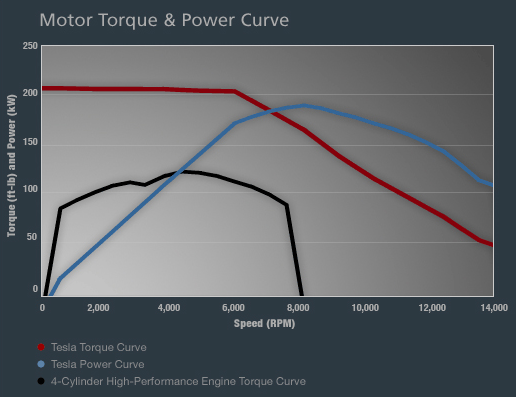
Gearing: A conventional engine requires complex gearing to provide high torque from a standing start. The Tesla has a single gear – zero to 125 mph without shifting, either manually or automatically.
Recharge time: At present, recharging is only available at 220 V. A portable 110V adapter kit will be available soon. In the meantime, I had to install a dedicated 220V, 90-amp line in the garage (at no trivial expense). When fully discharged, the batteries will recharge in 3.5 hours (at 110 V, the recharge time from full discharge could exceed 24 hours.)
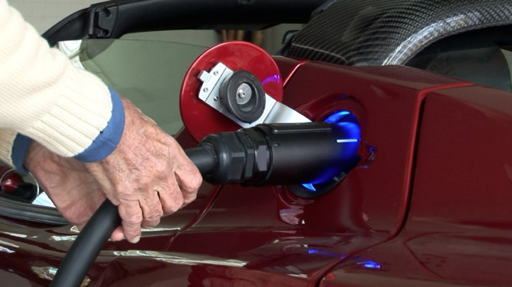
220V recharging cable
Price: Originally $100,000, now $109,000. The forthcoming Model S sedan, scheduled for 2011 delivery, will be less than half that price.
Weight: 2,732 pounds, of which 992 pounds are batteries.
Availability: The company has delivered 50 cars to date, and is now producing them at the rate of 10 per week. With a backlog of 1,200 orders, Tesla’s plan is to increase the rate to 30 to 40 per week in the spring.
Why is it called Tesla? The company name pays homage to Nikola Tesla, one of the great and prolific inventors in American history. The Serbian scientist-engineer arrived in the United States in the late 1800s to work with Thomas Edison, only to have a bitter falling out with him. (The Tesla-Edison rivalry is one of the great stories waiting to be dramatized – the foreign PhD who converted theory into practice, versus the self-taught empiricist Edison, who favored endless laboratory experimentation.) Tesla invented many of the seminal products in technological history, including the induction motor, the alternating current transmission system, and wireless radio (Marconi unfairly received a patent first, but Tesla’s invention actually preceded Marconi’s. Tesla was vindicated, and awarded the patent, some 50 years later).
Where is it made? The body, a modified Lotus Elise sports car, is manufactured in England. The powertrain is made and final assembly performed in San Carlos, California. The Model S will be manufactured in San Jose, California.
Ancillary benefits of Tesla ownership
No sales tax: Because it’s an alternative energy vehicle, the Connecticut 6% sales tax is waived. (This benefit varies state to state.)
High-occupancy vehicle lanes are available even with a single passenger.
No fluids to check or oil to change. No oil filters or air filters to change.
Good citizen. The satisfaction of knowing that one is making a small contribution toward reducing greenhouse gases, noxious emissions and petroleum consumption.
My concerns
Range is clearly an issue until the portable 110V recharger becomes available. Until then, I plan to stay relatively close to home.
The interior space is, shall we say, snug. It’s a bit of a challenge to get into the car, and a bit more of a challenge to get out, particularly if the top is on.
The trunk space is limited. The good news is that the trunk will hold one set of golf clubs; the bad news is that’s allit will hold.
Start-ups and giants:
Aptera: Last weekend, we were in Carlsbad, California, for a Caltech board retreat. Carlsbad also happens to be the home of Aptera Motors. Aptera, it turns out, is funded by Idealab, a company headed by my friend and fellow Caltech board member, Bill Gross. Bill arranged for me to get a test drive in the prototype Aptera electric car. Slated for 2009 delivery in both all-electric and range-extended hybrid versions, this radically designed three-wheel vehicle wins the space-age-looks award. It is a show-stopper. With a remarkably low coefficient of drag of 0.15, the car promises outstanding efficiency. Prices are expected to start at $27,000.
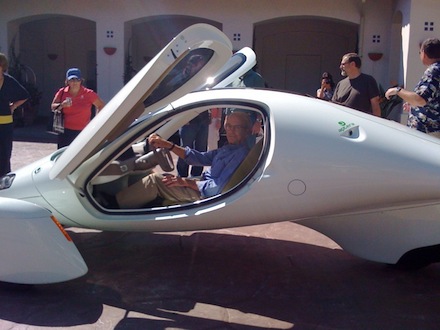
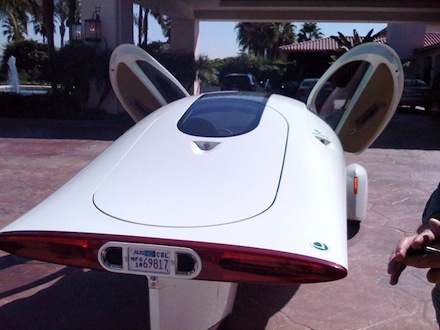
Aptera prototype
Chevy Volt: This 4-to-5 seat series hybrid, or range-extended electric car, is General Motors’ big bet on the future. It hopes to ship in 2010, or just before Tesla ships its Model S sedan.
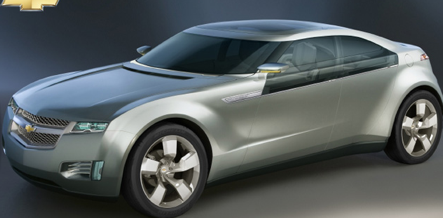
Chevy Volt
Other competitors: Many of the world’s leading auto manufacturers are also moving toward developing some type of electric and/or series-hybrid car. One should not underestimate their resolve to compete in this new technology marketplace. We who came up through the high-tech industries, and at one time had our sights on taking on the auto industry, tend to underestimate the ability of the auto industry to make very-high-volume products with very high functionality at very low cost. They have over 100 years experience down the learning curve, and have gotten pretty good at this type of manufacturing. They also have a huge amount of capacity available in which they could ramp up pretty quickly -- if they bring out the right products at the right price.
Tesla’s opportunity
Is there then a place for a start-up to compete with this potential electric-car onslaught from the Big Guys? Well, the Tesla Roadster reminds me a lot of my experience with the Compaq Portable. The latter was our beachhead into the computer industry in 1983, an industry that was then dominated by the IBM desktop. We as a start-up couldn’t compete head-on with IBM by selling desktops to corporate customers. We needed to create something that IBM didn’t have. So we introduced a product that was differentiable, one that IBM didn’t offer – a portable computer. A year later, when we had the beachhead established – broad corporate customer base, established channels of distribution, high-volume and low-cost manufacturing capability, in-depth engineering team, worldwide supply chain, international brand name – we could then move on to compete head-on with IBM in desktops. Which we did. Successfully.
Similarly, the Roadster is Tesla’s beachhead into the automotive business. Tesla makes electric cars; the establishment makes internal-combustion-engine vehicles. Tesla has two years to establish all those corporate capabilities required to compete with the giants when they finally invade Tesla’s turf. Compaq was able to do it against a pretty formidable competitor and go from start-up to a $40 billion company in two decades. Tesla has the same opportunity.
In the meantime I’m really happy that Tesla Motors brought out the Roadster. I’m having a hell of a good time with it, even though I’m apparently driving it too cautiously -- I haven’t got a single ticket yet.
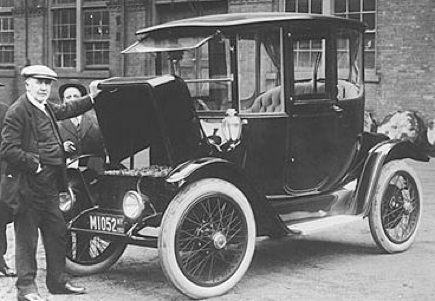
Electric car predecessor to the Tesla Roadster, circa 1900
Almost 21 months ago, Barack Obama threw his hat into the presidential race. Having prevailed in a bitterly fought primary, he now faces the final test -- tomorrow’s general election. Because there are so few pundits proffering opinions on the outcome (hah!), I thought that I’d help fill the vacuum by sharing my thoughts with you. Actually, I have just two predictions.
First, we should have a pretty good idea of the outcome by 7:01pm EST. Why 7:01pm? Polls in Virginia, a key swing state, close at 7:00pm. Presumably, exit poll information will be released shortly thereafter. If the exit polls indicate momentum one way or the other, that should be a pretty useful harbinger for the other battlegrounds. (This, of course, assumes that the exit poll accuracy will be better than those data from 2004, when there were some seriously misleading signals.)
My prediction is that Virginia will go to Obama by at least the margins forecast by the polls (see below).Fivethirtyeight.com projects a 4.7% margin, and Pollster.com 5.7%. This, then, would augur well for eight other key battleground states: Colorado, Florida, Indiana, Missouri, Nevada, North Carolina, Ohio, and Pennsylvania.
Virginia polls as of Nov. 3, 2008:
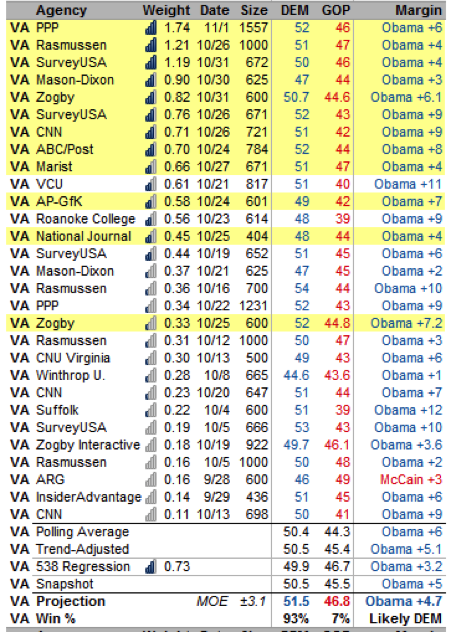
Source: fivethirtyeight.com
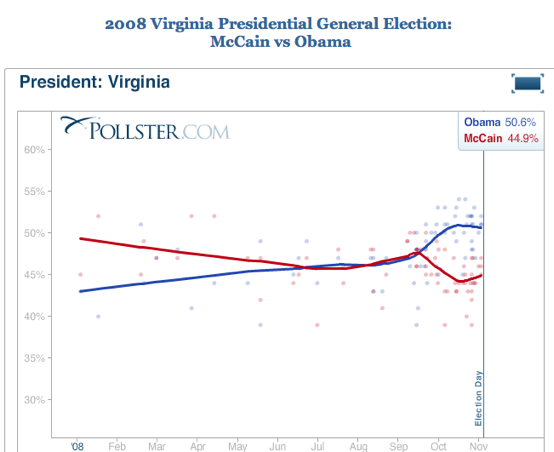
Source: Pollster.com
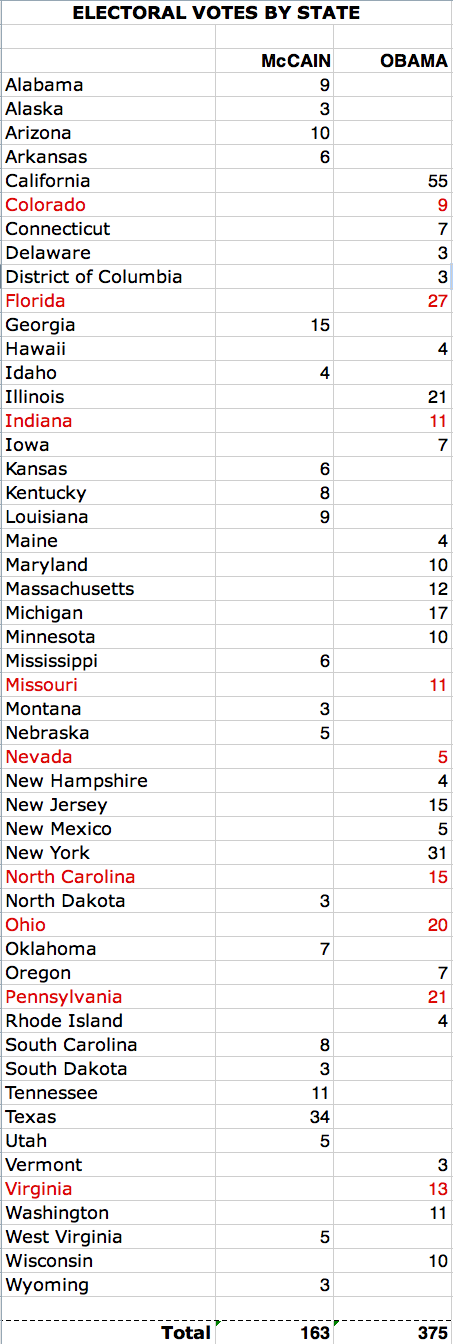
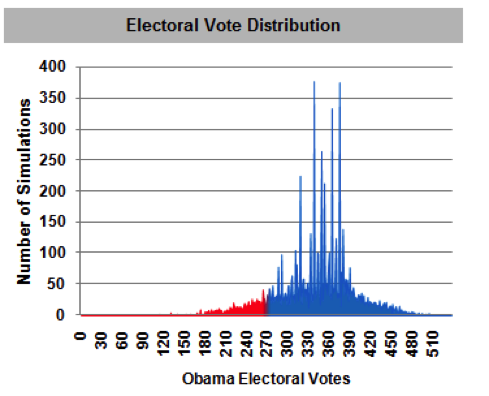
Here is my second prediction: as Virginia goes, so goes the election. My national election prediction is Obama 375 electoral votes, McCain 163. The state-by-state electoral predictions are below, with the swing states in red.
We shall soon know.
Thinking of traveling to London? Now’s not a bad time. The pound is down from $2.10 during our last trip to “only” $1.73 today. As a result, prices have dropped from out-of-sight to merely jaw-dropping. But the weather’s perfect, the art and theatre scenes are lively, and you’d never know a worldwide financial crisis is enveloping us. Somehow, the looming trickle-down poverty hasn’t yet trickled down from the world of the Masters of the Universe to the ordinary restaurants, hotels and entertainment venues. London streets are jammed, the energy is high, and life goes on. So we’re here to take to take it all in, including a bunch of plays and a lot of art.
THE ART SCENE
We started off with the Tates –Britain and Modern. At the former, the annual Turner Prize finalists had their work on display. The short list this year is made up of works of four British artists under 50. As in previous years, I left the display shaking my head, not in appreciation of the art, but in wonderment – what is this stuff?
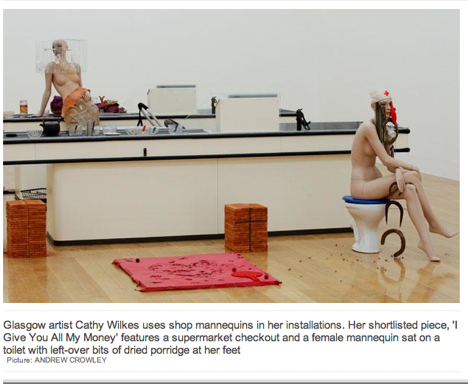
But rather than my articulating what is really a rank amateur’s opinion, here are appraisals from the British art critics:
To spend time in this show is like spending the afternoon in the departure lounges of Heathrow, Schiphol, Tempelhof and Charles de Gaulle airports. Physically you've moved from place to place, but, at the end of the day, you don't know where you've been. (Richard Dorment, Telegraph)
The annual frenzy of entrail-throwing that is the Turner Prize. (Charles Darwent, Independent)
If ever you were thinking of giving the Turner Prize a miss, not rushing down to the show at Tate Britain, not tuning into the televised ceremony, then 2008 is the ideal year. (Laura Cumming, Observer)
Some years ago, Art Buchwald wrote an unforgettable column on the breaking of the “four-minute Louvre” record. Written on the 40th anniversary of Roger Bannister's breaking the four-minute mile barrier in 1954, Buchwald described how a museum-goer in Paris broke a similarly unattainable speed record for seeing the Louvre. He zipped through the Louvre, that is, the essential Louvre -- Mona Lisa, Winged Victory and Venus de Milo – in less than four minutes! I was reminded of this achievement Monday when I’m sure I shattered all speed records for viewing the Turner Prize exhibition. (An excerpt from Buchwald's very funny column can be seen here in his Washington Post obituary.)
The Turner Prize this year was (appropriately?) demoted to the basement of Tate Britain. Wending our way upstairs, we took in the stimulating Francis Bacon show, allowing us to leave the museum with a better appreciation of British art, historically if not prospectively.
On to Tate Modern for the Rothko show. As Michelin might say, worth a special detour. The master in a masterful exhibition.
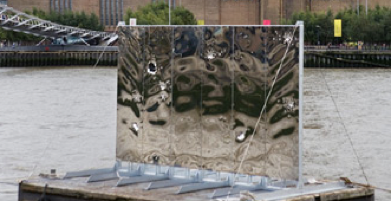
Across the river from the Tate Modern was an installation in the Thames of a floating artwork by our good friend from Louisiana and New York, Margaret Evangeline. Her piece is one of seven works that is part of Drift 08, a platform to enhance the London art scene by placing floating works along the river in central London.
The British Museum special exhibition of Hadrian: Empire and Conflict was a treat. Hadrian, as I’m sure we all remember, reigned from AD 117-138, and ruled an empire that included much of Europe, northern Africa, and the Middle East.
The Frieze Art Fair in Regent Park was jammed, economic crisis or no. Surprisingly (to me), lots of painting.
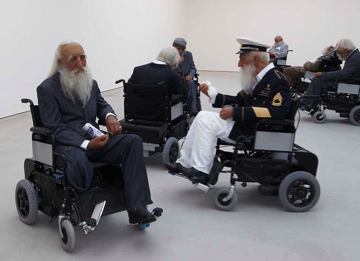
At the new Saatchi Gallery, nary a pickled fish nor jeweled skull in sight. Instead, a surprisingly (to me)stimulating exhibition of contemporary Chinese art. One highlight by artists Sun Yuan and Peng Yu: a roomful of robotic, wheelchair-bound world-leader likenesses rolling around the floor, never bumping into the museum-goers or into each other. Art meets science meets satire.
Other galleries around town benefited from the art collector influx for Frieze. Spent time at Waddington, White Cube and Alan Cristea, where a Julian Opie show just opened. Missed the Richter show at the Serpentine – had to save something for next time.
THE THEATRE SCENE
Although we live in New York just a few blocks from the Broadway theater district, and attend shows frequently, we feel this compulsion twice a year to fly to London to soak in the British theatre scene. Some reflections:
Acting: They do act well. Almost universally, even in the less than first-rate shows, the professionalism of the acting is striking. We’re constantly impressed by their diction and projection. (The latter quality is so often missing in the U.S. when film stars are on Broadway.) Maybe it’s because so many of the British actors train at RADA (Royal Academy of Dramatic Arts) instead of film or television, maybe it’s because so many of their résumés are larded with Shakespearean roles, maybe it’s because theatre is their first profession rather than their fill-in, maybe it’s because they have such great accents, or maybe it’s just because we’re Anglophiles. Whatever the reason, it’s rare that we don’t remark at the end of a play how outstandingly the lead actors and the ensemble performed.
Sound: Guess what? Amplified sound is not alive and well in London. Indeed, we’ve yet to hear an amplified voice in a straight dramatic show this week. On Broadway, where almost every show uses body mikes on the actors, the actors’ voices emanate from loudspeakers placed around the theater. Here, the sounds emanate from the actors’ mouths. How refreshing!
Ivanov: Not to be missed. A bravura performance by Kenneth Branagh, one of the finest, most versatile performers of our time. Tom Stoppard has adapted the Chekhov classic in a gripping, entertaining version. The large ensemble is universally terrific.
Creditors: Moving along from 19th-century Russia to 19th-century Sweden, this Strindberg play grips from start to finish. Whether focusing on the weaknesses of Chekhov’s characters or the flaws of Strindberg’s, these two plays go far to examine – painfully – the human condition. (BTW, the title "Creditors" is not related to the current credit crunch -- it refers to emotional, not financial, debts.)
Brief Encounter: Evoked by the 1945 David Lean movie, which in turn was based on an earlier Noël Coward play, this love story cum music-hall-revue cum farce cum movie misses often, but hits frequently enough to leave you with a smile on your face for most of the evening. Anyway, I’m a sucker for the Purple-Rose-of-Cairo technique of live actors magically dissolving into screen characters, and vice versa. Not a must see show, but not a disaster, either. (Faint praise, but what’s wrong with faint praise, anyway?)
Six Characters in Search of an Author: Pirandello was avant garde when he wrote this play 87 years ago, and it’s still avant garde. Almost impossible to describe – something to do with the question of what is real and what is fiction – it has to be experienced in what is a remarkably energetic production.
Now or Later: Well-reviewed by the London critics, but a rather modest, play about ethical choices facing a U. S. presidential candidate. A candidate who might say different things to different audiences? One who might try to hide family embarrassments? One who would do whatever necessary to get elected? Why, what presumption. I’m shocked, shocked. The British audience loved it. Can it be I’m getting too cynical?
Piaf: Revival of the “biodrama with music” (not listed as a musical, but it was a musical). Remarkable performance by (Argentinean) Elena Roger as the Little Sparrow, who sang all the songs in French, who inhabited Piaf in a stunning emotional display, and who received (what is fortunately unusual in London theatre) a standing O. But, oh, that creaky book.
The Norman Conquests: Another revival, this one of the wonderful 1973 Alan Ayckbourn comedy, albeit a comedy replete with poignant insights into the never-simple relationships between the sexes. A six-hour trilogy in one day – and it never flagged. Each of the three plays takes place contemporaneously in a different location of the same weekend house. As one reviewer wrote, be careful before you accept an invitation to spend a weekend in the country.
ON POLITICS
Today’s financial near meltdown: Quoting Abraham Lincoln, Adlai Stevenson said after losing the 1952 election in a landslide to Dwight Eisenhower, “ It hurts too much to laugh, but I’m too old to cry.”
As I’m writing this, the US stock market is down 4% after having plummeted 8% earlier in the day. For the year, the S&P is off 28%. A drop like this gets one’s attention. Some might say that blogging on a day like this is akin to Nero fiddling while… But what the hell, it beats looking at the tickertape.
ELECTION POLLS
Every day I check five different websites for their latest polling analyses. Each has some advantages. Here is a useful graphic or two from each of them:
538 (number of electoral votes)
The best analysis of the polls (by a young, baseball statistician). Weights polls as to their track record, timeliness, sample size. Obama surge is undeniable in last few weeks.
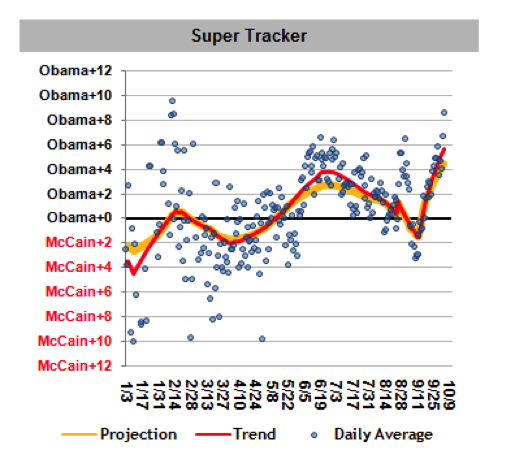
Shows probability of various electoral college outcomes. Suggests possibility of an Obama landslide.
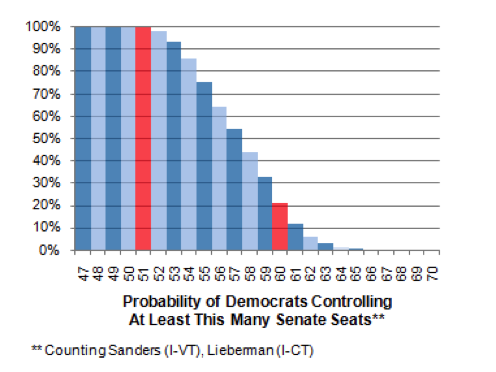
Chances of a filibuster-proof Senate are slim, about 20%.
Pollster
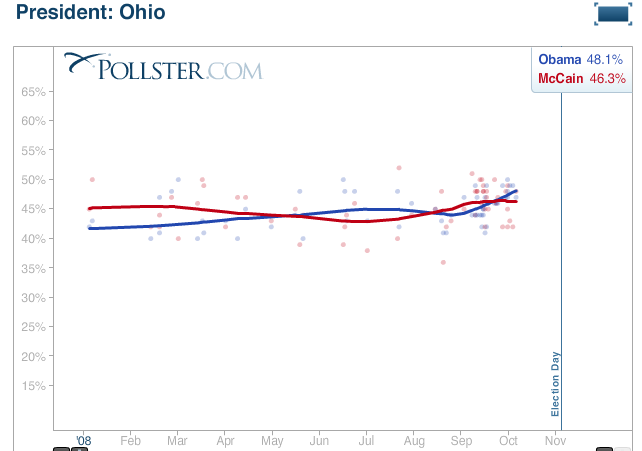
Swing-state Ohio (Bush 51-49 over Kerry) has just gone blue.
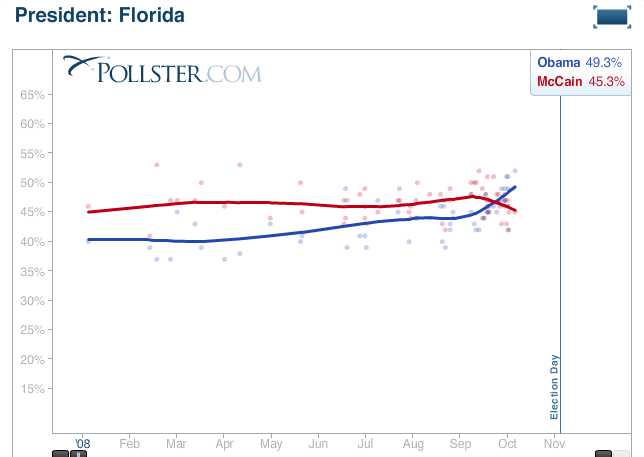
Key state Florida (Bush 52-47 over Kerry) also swinging into blue.
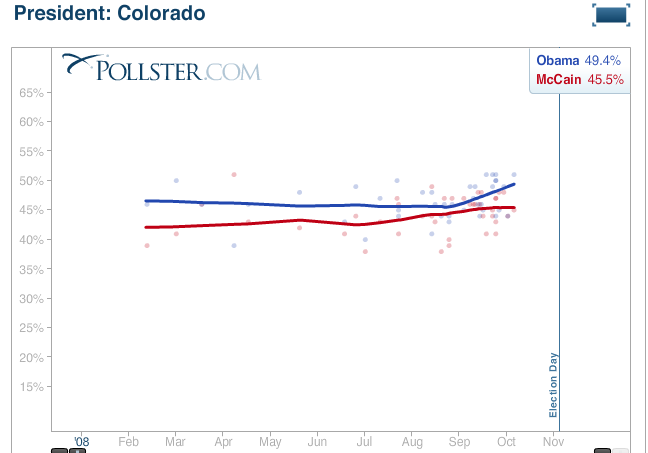
Swing state Colorado (Bush 52-47 over Kerry) moving to Obama.
Gallup Daily
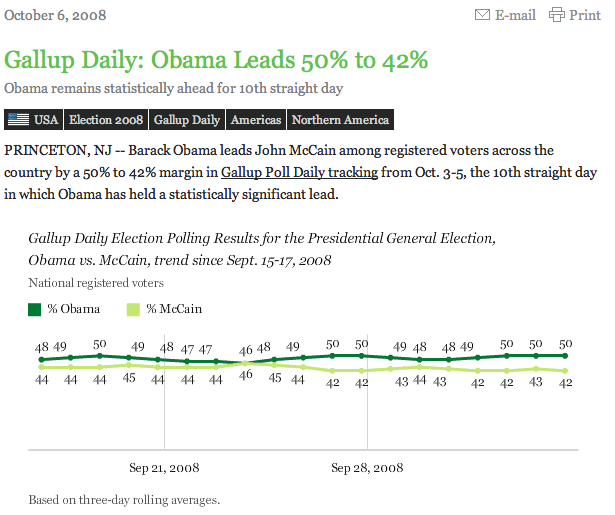
Gallup tracking poll surveys daily; provides a measure of sentiment changes.
Real Clear Politics
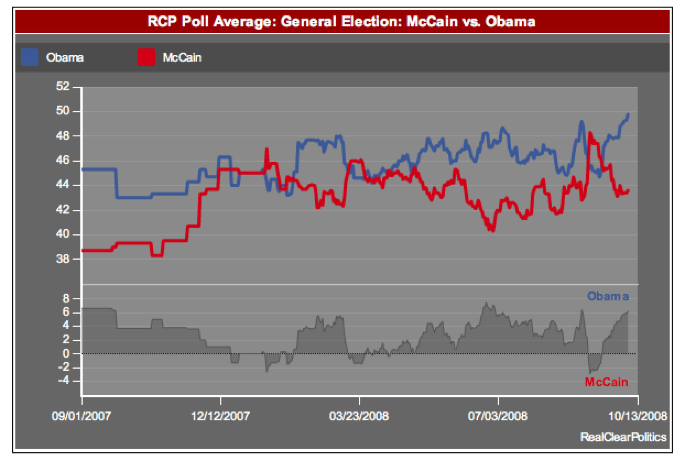
Another useful average of all polls. Obama gap widening.
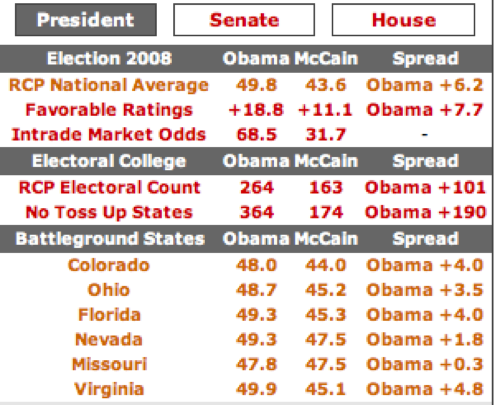
Good summary data, national and state.
Electoral-Vote
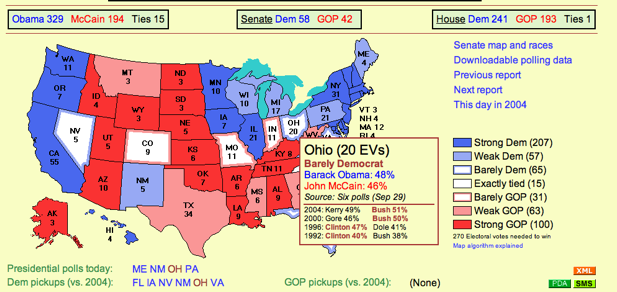
Complete electoral vote information by state.
THE SMARTEST GUY IN THE ROOM
Hank Paulson may be in charge, but does the following quote from his interview in Fortune, July 12, 2007, give you confidence that he’s on top of the situation?
"On risks: We haven't had a global financial shock since 1998. I believe that these large and dramatic increases in private pools of capital [hedge funds and private equity] and in the credit derivatives markets since then have helped manage and disperse risk and make the economy more efficient."
ELECTION VIDEOS
In case you missed it, the Saturday Night Live spoof of the vice presidential debate was hilarious. Be sure to watch it here.
And also in case you missed it, there is a new mystery candidate who has just entered the presidential race. After you’ve watched the video here, you can follow the directions at the end of the video and nominate another candidate of your choosing.
BANKS CLOSING
On March 4, 1933, Franklin D. Roosevelt was inaugurated president of the United States. Seven days later I was born. That week, FDR closed all the banks in the country. I’m not sure whether his action was in honor of, or in despair of, my birth. Seventy-five years later we’re losing banks again. This time, I think I’m blameless.
QUICK QUIZ
Question: What happens on January 20, 2009? Easy. The 44th President of the United States will be inaugurated. Next question: What happens on January 21, 2009? Also easy. The campaign for the 2012 presidency begins.
SO MUCH FOR ECON 101
A physicist to the rescue: In my last post, I bemoaned the fact that with regard to the economic crisis, “nobody knows anything.” Certainly the results since then suggest the perspicacity of that accusation. Learned men and women have demonstrated repeatedly that their actions (and inactions) can successfully result in chaos in the worldwide marketplaces.
One fascinating explanation of the economic chaos was proffered by, of all people, a theoretical physicist in an October 1 op-ed piece in the New York Times. Mark Buchanan argued that “economists still try to understand markets by using ideas from traditional economics, especially so-called equilibrium theory. This theory views markets as reflecting a balance of forces, and says that market values change only in response to new information… Markets are otherwise supposed to have no real internal dynamics of their own.
“Too bad for the theory, things don’t seem to work out that way… Really understanding what’s going on means going beyond equilibrium thinking and getting some insight into the underlying ecology of beliefs and expectations, perceptions and misperceptions, that drive market swings.
“Surprisingly, very few economists have actually tried to do this, although that’s now changing – if slowly – through the efforts of pioneers who are building computer models able to mimic market dynamics by stimulating their workings from the bottom-up…
“The model shows something that is not at all obvious. The instability doesn’t grow in the market gradually, but arrives suddenly. Beyond a certain threshold the virtual market abruptly loses its stability in a “phase transition” akin to the way ice abruptly melts into liquid water. Beyond this point, collective financial meltdown becomes effectively certain. This is the kind of possibility that equilibrium thinking cannot even entertain.”
It may not be easy reading, but it’s stimulating. It’s true that rocket scientists on Wall Street have contributed to a wee bit of havoc in recent years by creating some esoteric derivative instruments, but perhaps nuclear physicists working in economics models can make a more substantive contribution. In any event, the thinking is fresh, unconventional and holds promise.
REFLECTIONS ON MUSIC
Mozart effect: Some years ago, there was research that suggested that young children listening to Mozart could benefit mentally, that it would actually make them smarter. Later studies, however, dismiss these findings. In any event, I think you’ll be amused by the following extensions of the Mozart effect to the benefits of listening to music by other composers – whatever your age. (Thanks to Zarin Mehta of the New York Philharmonic for sending me the following.)
A recent report says that the Mozart effect is yet another charming urban legend. The bad news for hip urban professionals playing Mozart for their designer babies: It will not improve his IQ or help him get into that exclusive preschool. He'll just have to get admitted to Harvard some other way.
Of course, we're all better off listening to Mozart purely for the pleasure of it. However, one wonders whether, if playing Mozart sonatas for little Jason or Tiffany really could boost his or her intelligence, what would happen if other composers were played during the kiddies' developmental time?
Liszt Effect: Child speaks rapidly and extravagantly, but never really says anything important.
Bruckner Effect: Child speaks v-e-r-y slowly and repeats himself
frequently and at length. Gains reputation for profundity.
Wagner Effect: Child becomes an egocentric megalomaniac. May eventually marry his sister.
Mahler Effect: Child continually screams -- at great length and volume -- that he's dying.
Schoenberg Effect: Child never repeats a word until he's used all the other words in his vocabulary. Sometimes talks backwards. Eventually, people stop listening to him. Child blames them for their inability to understand him.
Ives Effect: The child develops a remarkable ability to carry on several separate conversations at once, in various dialects.
Glass Effect: The child tends to repeat himself over and over and over and over and over and over and over and over and over and over and over and over and over again.
Stravinsky Effect: The child is prone to savage, guttural and profane outbursts that often lead to fighting and pandemonium in the preschool.
Brahms Effect: The child is able to speak beautifully as long as his sentences contain a multiple of three words (3, 6, 9, 12, etc.). However, his sentences containing 4 or 8 words are strangely uninspired.
Cage Effect: Child says nothing for 4 minutes, 33 seconds - exactly. (Preferred by 10 out of 10 classroom teachers.)
Tuning an orchestra: Not too long ago, Donna and I hosted a Philharmonic patron event in our apartment, where several orchestra musicians entertained. I hired our regular piano tuner, who happens to work for the Metropolitan Opera, to tune the piano. As was the Met’s practice, he tuned it to A = 440Hz (Hertz, or vibrations per second). The Philharmonic, I learned shortly after, tunes to A = 442Hz. I can’t believe that anyone can tell the difference between 440 and 442, but it turns out that real musicians can. So I had to rehire the tuner to re-tune all 88 keys. Whatever the frequency, the concert sounded great.
REFLECTIONS ON PROFESSIONAL FOOTBALL
Am I the only one who can’t stand the conservatism of professional football coaches? They seem so bound by conventional wisdom and tradition, doing what they do because they (and others) have always done it that way. They follow a philosophy of “lose the least” rather than “make the most.” As a result, he product suffers compared to what it could be. A potentially exciting sport has become turgid and formulaic.
Think of some of the really exciting plays you’ve seen (or heard about) in football, albeit rarely:
The halfback option, where the running back unexpectedly throws a pass (often for a touchdown).
A quick-kick on an early down, catching the defense without a returner in place (with the kick often going for a prodigious distance).
The two-point conversion to win a game (instead of that most boring of all plays, the extra-point kick, to tie).
A lateral by the pass receiver, who, after catching the ball, flips the ball to a teammate (who usually runs for a touchdown).
The reluctance to go for it on fourth down (choosing instead to punt, often resulting in a touchback, usually for a 20-or-so yard net distance).
And the excessive use of truly boring rushing plays (mostly up the middle).
Let’s look at the last two choices. If the chances of converting fourth downs were slim, it would be understandable that coaches almost always punt in this situation. But the data suggests the opposite. I went through the NFL statistics for all 32 teams during the 2007 regular season, and they shows the following:
Fourth down attempts: 533
Fourth down conversions: 261
Fourth down success ratio: 49%
I suspect that this success ratio is a lot higher than most people think. So it would seem to me that if a team is interested inwinning, rather than not losing, the number of fourth-down attempts would be a lot greater than the 2007 average of one per team per game.
And what about rushing versus passing? In 2007, the league-wide average gain per attempted pass was 6.8 yards. The gain per rush was 4.0 yards. Why, then, do they not pass more, given that the average passing yardage per attempt is 70% greater than per rush?
The conventional wisdom answer of course, almost a mantra, is that you need the rush to open up the pass. But is this true? Is there any data to support it? I don’t think so. And even if partly true, how much would you have to confuse the defense? Perhaps rushing 5% or 10% of the plays, instead of the 45%-50% now, would create enough uncertainty.
REFLECTIONS ON NEW ORLEANS
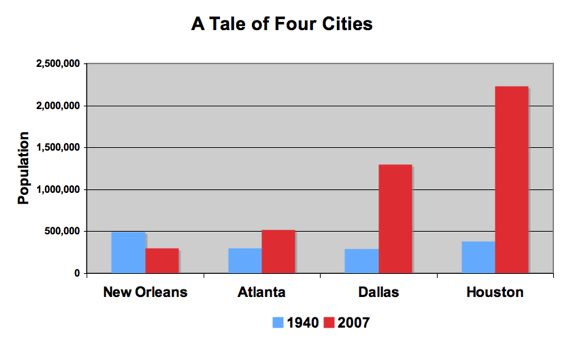
The Crescent City has certainly suffered a shattering blow from hurricane Katrina, not the least of which was the diminution of its population from the pre-storm 450,000 to the current 300,000. But well before this 2005 disaster, New Orleans was the victim of another set of disasters: incompetent, uncaring and crooked leadership at the local and state government levels. A tradition that began in the early 1930s by Huey Long. He started it, and many disciples and wannabes later perfected it.
Coupled with this lapse in political leadership was a failure from within the city’s citizenry. Ben C. Toledano described this source of urban decay eloquently in “New Orleans – An Autopsy,” an essay in the Sept. 2007 issue of Commentary magazine. (Ben C. and I were classmates from fifth through eighth grades.) He blames a large part of the demise on the practices and prejudices of the narrowly-based social and economic oligarchy that largely controlled the city.
My memory of growing up in New Orleans during the 1930s and 1940s was that we were first among equals of the four major southern cities; the others were Houston, Dallas, and Atlanta. Indeed we were the largest in population, we had the second-largest port in the country, we were in a state with immense natural resources, and we were certainly the most sophisticated and interesting city of the four.
Today, Houston and Dallas and Atlanta have left New Orleans in the dust. Yes, we still have the best food, the most interesting architecture, and the greatest music. But those three cities have left New Orleans in their wake – in population, commercial importance and standard of living. We’re more fun, but they offer their inhabitants much more economic opportunity and upward aspiration.
I have great hopes that the new governor, Bobby Jindal, will provide the necessary leadership to move the state and city forward. And in little over a year, New Orleans will elect a new mayor. The latter event can only be a positive development. In the meantime, I’m conjuring up ideas on what I can do to help rejuvenate the city commercially. The ideas are embryonic, but the enthusiasm is well developed. To be continued.
A FINAL, REALLY EXCITING, NOTE
As I write this at 7:00pm, I just received word that my all-electric Tesla Roadster (featured on 60 Minutes last night) will arrive at our Kent, Connecticut, home tomorrow morning. So what started out as yet another end-of-the-world-as-we-know-it day has suddenly morphed into something pretty electrifying, as it were.
My explanation for the economic chaos
In 1983, screenwriter William Goldman (Butch Cassidy, Marathon Man, All the President’s Men, Princess Bride, et al.) wroteAdventures in the Screen Trade, a brilliant and entertaining analysis of the movie industry. His unforgettable takeaway line that summarized the entire 436-page book, the phrase that captured the essence of Hollywood, and now the single best explanation of why we’re in such a economic mess: “Nobody knows anything.”
Who are the nobodies? Well, there are the CEOs, the Treasury, the Fed, the Congress, the Administration, the SEC, the other regulators, the journalists, the investors and the voters. Did I leave anyone out?
You probably never thought that Hollywood’s moguls and the Masters of the Universe had so much in common, but they do. What else could account for this fiasco? Goldman’s phrase is the perfect answer to the question that everyone is asking – why? Simple. Nobody knows anything. Yet while so many know nothing, never have so many been paid so much to do so much harm.
As we enter this New Era of financial reform, we’re faced with one really dangerous law that our nobody-knows-anything economic leaders will incorporate into the new legislation/regulation/fiat that is being foist upon us. This law requires no majority in congress and no Presidential approval. But it will be enacted. The law, of course, is the Law of Unintended Consequences. That law will be the only sure thing to emerge from the tortuous process now going on in Washington.
New words to add to your crisis vocabulary
“Credit-default swaps.” A buck if you can explain what a credit-default swap is. I can’t. But I learned from this morning’s Wall Street journal that it’s “a complex type of investment that acts like an insurance policy on loans and bonds.” Of course. Now I understand. By the way, this (now-simpler-to-understand) instrument has grown this decade from almost nothing to over $60trillion. Trillion! By comparison, the GNP of the U.S. is a puny $14 trillion. Which gives rise to the next new word in our crisis vocabulary…
“Trillion.” The late Senator Everett Dirksen is perhaps best remembered for his comment in the 1960s on the mushrooming government budget: “A billion here, a billion there, pretty soon it adds up to real money.” (What would he think of $700 billion here, $700 billion there?) So for those who can’t comprehend what it a trillion is, it’s simple: a thousand thousand thousand thousand. That doesn’t help? Well, think of it this way. Those of us who are aging like to pretend that 50 is the new 30, and 70 is the new 50. So try this: trillion is the new billion.
“Toxic.” In the press, we no longer see the word “mortgage” all by itself. It’s “toxic mortgage.” To remind us all of what we’re dealing with, toxic means poisonous, virulent, noxious, deadly, dangerous, harmful, injurious, pernicious.
“Privatizing social security.” This is a phrase that you can delete from your vocabulary. It no longer has any meaning.
Speaking of nobody knowing anything
We’re all overwhelmed by the volume of political verbiage today; we’re in danger of its burying us. Recently, the commentary on Sarah Palin has been at the forefront of pundits’ opinions. To save you time, here is one of the better Palin comments I’ve read. It’s by Sam Harris, and appeared at the end of a long piece of his in the Sept. 29 issue of Newsweek:
What is so unnerving about the candidacy of Sarah Palin is the degree to which she represents—and her supporters celebrate—the joyful marriage of confidence and ignorance. Watching her deny to Gibson that she had ever harbored the slightest doubt about her readiness to take command of the world's only superpower, one got the feeling that Palin would gladly assume any responsibility on earth:
"Governor Palin, are you ready at this moment to perform surgery on this child's brain?"
"Of course, Charlie. I have several boys of my own, and I'm an avid hunter."
"But governor, this is neurosurgery, and you have no training as a surgeon of any kind."
"That's just the point, Charlie. The American people want change in how we make medical decisions in this country. And when faced with a challenge, you cannot blink."
The prospects of a Palin administration are far more frightening, in fact, than those of a Palin Institute for Pediatric Neurosurgery. Ask yourself: how has "elitism" become a bad word in American politics? There is simply no other walk of life in which extraordinary talent and rigorous training are denigrated. We want elite pilots to fly our planes, elite troops to undertake our most critical missions, elite athletes to represent us in competition and elite scientists to devote the most productive years of their lives to curing our diseases. And yet, when it comes time to vest people with even greater responsibilities, we consider it a virtue to shun any and all standards of excellence. When it comes to choosing the people whose thoughts and actions will decide the fates of millions, then we suddenly want someone just like us, someone fit to have a beer with, someone down-to-earth—in fact, almost anyone, provided that he or she doesn't seem too intelligent or well educated.
I believe that with the nomination of Sarah Palin for the vice presidency, the silliness of our politics has finally put our nation at risk. The world is growing more complex—and dangerous—with each passing hour, and our position within it growing more precarious. Should she become president, Palin seems capable of enacting policies so detached from the common interests of humanity, and from empirical reality, as to unite the entire world against us. When asked why she is qualified to shoulder more responsibility than any person has held in human history, Palin cites her refusal to hesitate. "You can't blink," she told Gibson repeatedly, as though this were a primordial truth of wise governance. Let us hope that a President Palin would blink, again and again, while more thoughtful people decide the fate of civilization.
Memories of another era in the computer industry
In January 1980 (well before investment banks became bank holding companies) I retired as a securities analyst from Morgan Stanley to move on to other endeavors. To celebrate my change in career, and in lieu of anyone else volunteering, I threw myself a party at the then hub of Silicon Valley, Rickey’s Hyatt House, in Palo Alto. I had a lot of photos of the party, but unfortunately, most of them have gone to that Great Gallery in the Sky. I did, however, recently came across these few. (We were younger then, and more hirsute.)
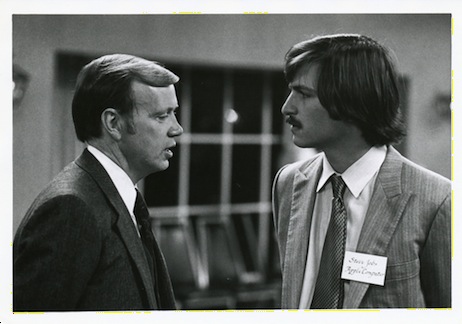
Regis McKenna (PR guru) and Steve Jobs (Apple)
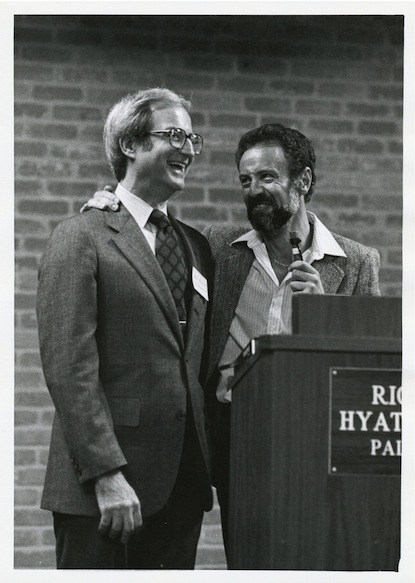
Ben Rosen and Andy Grove (Intel)
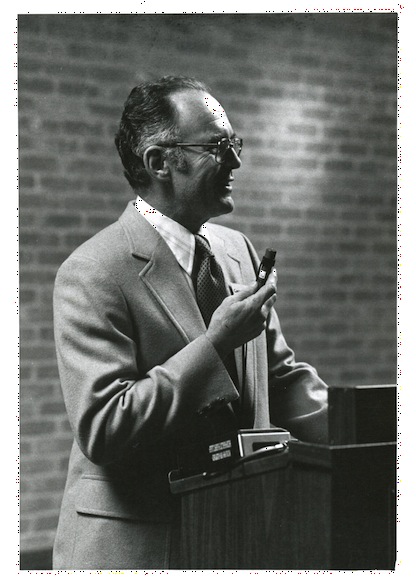
Gordon Moore (Intel)
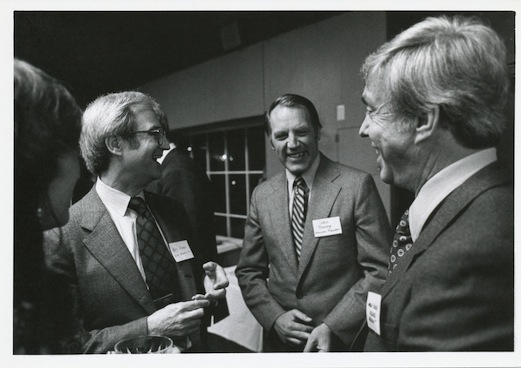
John Young (HP) surrounded by Rosens
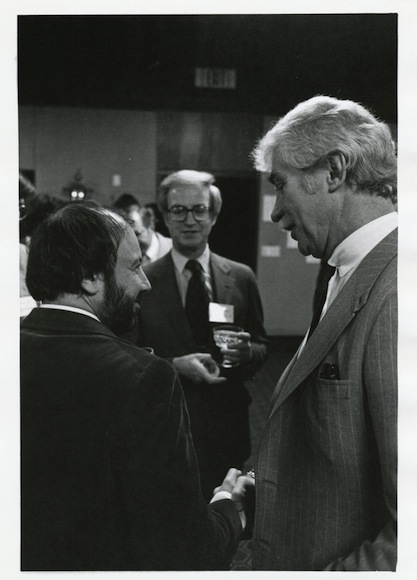
Jerry Sanders (AMD - right)
Electric vehicle update
“Your vehicle is ready to be shipped to you soon.” That’s the email I received today from Tesla Motors regarding the Roadster that that I've had on order for several years, and I can’t wait. In fact, I got so antsy waiting for it – it’s a year and a half late -- that I recently bought a Segway – the two-wheeled Human Transporter that was the most hyped product of its time. Introduced in 2002, the self-balancing Segway is an engineering tour de force, a truly remarkable feat of applying sophisticated technology to solving a problem. The problem, however, turned out to be one that few had. It reminded me of Amazon.com’s electronic reader, the Kindle – another example of technology searching for a problem.
My experience so far with the Segway has paralleled the disappointing response of the broader market. In the few weeks that I’ve owned it, I’ve been hard-pressed to find a useful application. It is, however, an amusement for outdoor parties in the summer, though I do get concerned about the adequacy of my insurance coverage when first-time users try it out, especially after they’ve had a libation or two.
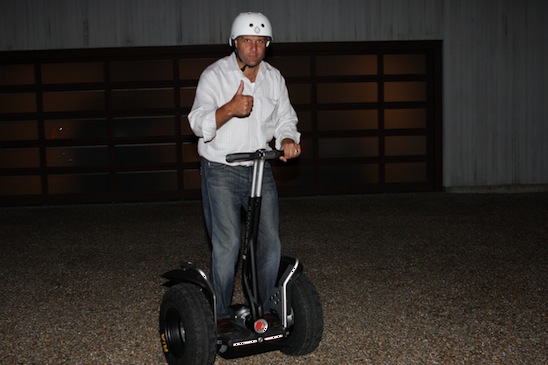
Guest aboard the Segway
Oh, yes, Tesla has now engendered competition from two of the (formerly) Big Three, General Motors and Chrysler. They have both announced electric cars, but not all-electric (as is Tesla’s design). The newer offerings have a fully-charged battery range of 40 miles that can be extended to hundreds of miles by an onboard gasoline engine. Both all-electric and range-extender approaches have merit; actual experience in service will determine the better solution. One other difference: Tesla hasn’t asked the Washington for $25 billion, as have the Big Three, to support its effort. How last century not to ask for a government bailout!
Google Lunar X follow-up
My high hopes (Spin Me to the Moon) that my brother Harold and his Southern California Selene Group would win the $20 million first prize have been dashed. The team withdrew from the competition, even though they had such an incredibly clever design. The issue? It turns out that the prize’s sponsors had as a goal not an elegant and low-cost scientific mission to the moon, but rather an absurd goal of commercializing space – e.g., mining the moon, beaming power to the earth, and other such dubious ventures.
Harold decided there was no way he wanted to be involved in promoting a goal he doesn’t believe in, or, as he puts it, “an outrageously unrealistic version of space commercialization.”
Another poignant follow-up
Ten-year-old Eclipse Aviation, the pioneer of the very-light-jet industry, is going through significant growing pains. And then some. Ten years after founding the company, CEO Vern Raburn was forced out by the board. Not the first time a founder has been replaced, but no less sad when it happens, especially when it involves a friend of 35 years.
A note on philanthropy
Two related items caught my attention this week. Alberto Vilar, erstwhile technology investor and philanthropist, went on trial Monday on charges of defrauding his investors. Today the New York Sun ran a piece about a forthcoming biography ofMaimonides by Joel Kraemer. What’s the link between the two items?
Let’s start with Maimonides, the 12th century Jewish philosopher (and also doctor and rabbi), whose most famous work was hisGuide to the Perplexed. (Should be a good market today for a book with that title.) Among Maimonides’s interests was philanthropy. He wrote of the seven levels of virtue in charitable giving. They are, in ascending order of virtue:
7. The least virtuous, to give grudgingly.
6. Next, and more virtuous, to give less than one should, but graciously.
5. Next, to give what one should, but only after being asked.
4. Next, to give before being asked.
3. Next, to give without knowing who will receive the gift, though the recipient knows who you are.
2. Next, and almost the best, to give anonymously.
1. And finally, the most virtuous of all, to give anonymously, with the recipient not knowing who you are.
Now let’s switch to Mr. Vilar. His story as a most generous donor to opera and classical music organizations is well known. As is his running into financial difficulties after the tech bubble burst and becoming unable to fulfill many of the sizable pledges he had made during the salad days of tech investing. But what I found most interesting about his philanthropy was not just his passion for the arts, but also for personal recognition. Naming rights are now a well-established part of the charity game – he who gives the money gets the right to name the building/hall/room/seat/ashtray. But Alberto took it to a new level, at least in one case.
Some years ago, when he was negotiating funding for a new Met Opera production, he submitted an unusual request to then general manager Joe Volpe. Alberto wanted his name, as production funder, to be listed in the Playbill in type the same size as the composer’s, arguing that the importance of Alberto Vilar to the production was equal to that of Mozart.
Request denied.
Joe Volpe could handle Vilar, but I’m not sure what Maimonides would make of him. I do know, however, where Vilar would rank in the seven levels of virtuous giving.
Few donors today rank in Tier No. 1 of virtue – anonymous giver, and anonymous even to the recipient. Today’s eight- and nine-figure donors typically expect pretty prominent name recognition. But just today I learned that the principal donor to the new Frank Gehry hall being built for Miami Beach’s New World Symphony comes close. The $90 million lead gift for the $150 million campus has been donated anonymously. That would make Maimonides happy.
A day at Lime Rock
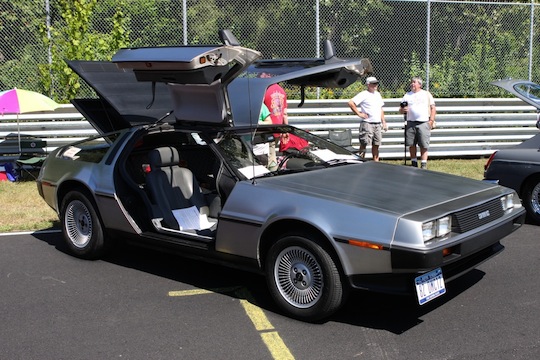
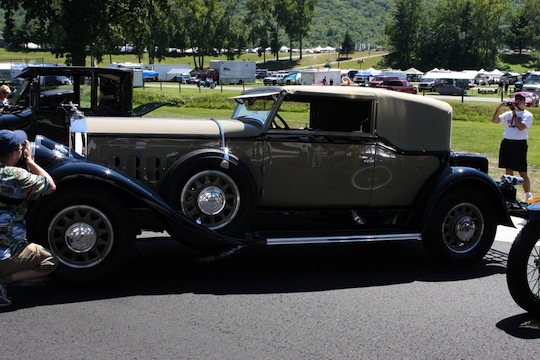
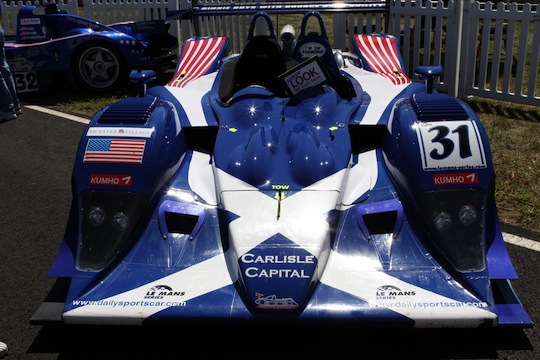
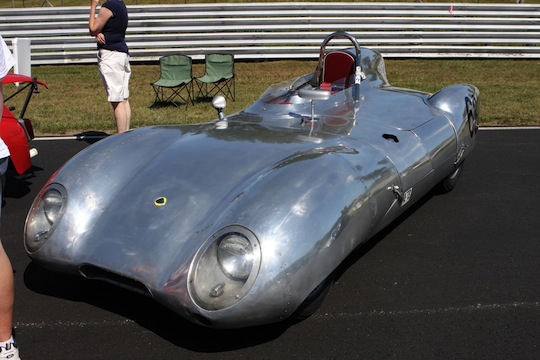
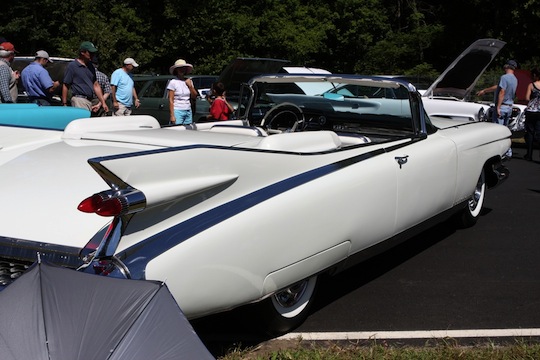
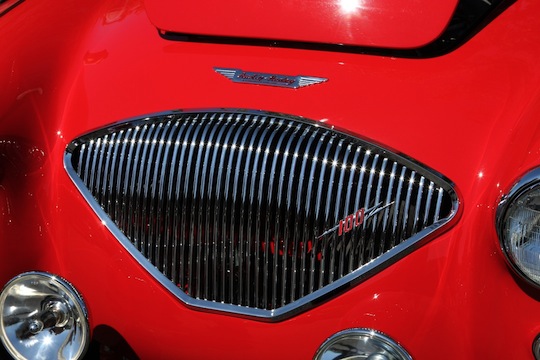
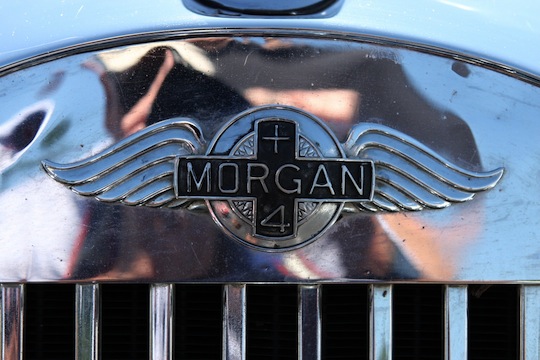
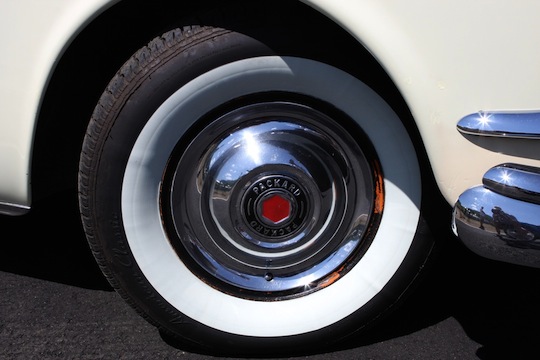
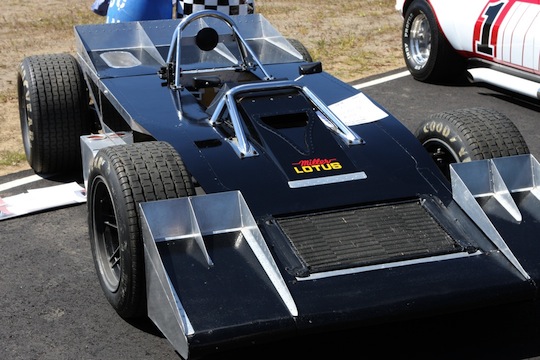
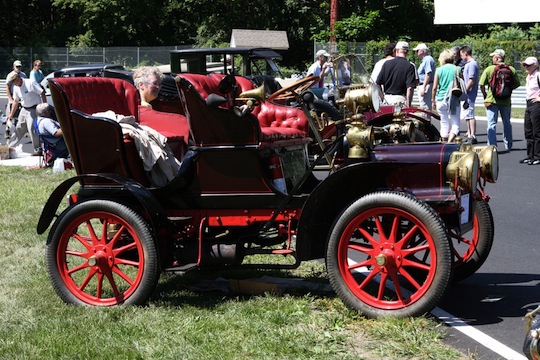
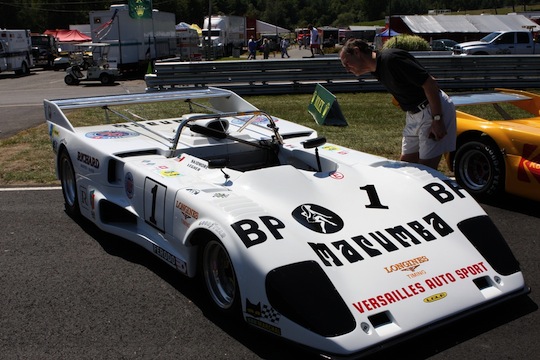
Every Labor Day weekend, Lime Rock race track in northwestern Connecticut hosts the Rolex Vintage Festival, a display of old and very old sports and racing cars, with a few other non-racing classics thrown in for good measure (e.g., , 1930 Pierce Arrows, postwar tailfin Cadillacs).
Two things struck me. First, most of the cars were sleek or sexy or elegant or outrageous or unique or inspiring or nostalgia-inspiring. Second, many of the people staring at the cars were none of the above.
First, the cars:
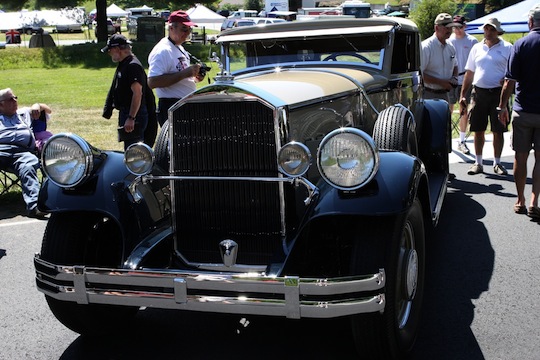
Second, (some of) the people :